Bath Bombs and Bath Salts: The MyOrigines Selection
Using bath salts transforms your bath into a truly relaxing experience and body care. Long used for their benefits, sea salts and Epsom salts help relax muscles, relieve stress, and gently nourish the skin. MyOrigines helps you take care of your personal hygiene and treat yourself to a moment of relaxation with these products from the best brands.
Enriched with natural minerals and often combined with essential oils or fragrances such as lavender, these products offer a complete sensory experience. Bath salts help purify the skin, promote relaxation, and enhance comfort after a busy day.
The Benefits of Bath Bombs
Bath bombs and their enriched formulas provide real benefits for your skin and mind. There’s nothing quite like them for releasing the tensions of daily life. Here are the benefits after use.
Skin hydration: bath bombs enriched with shea butter, coconut oil, or monoï leave the skin soft and nourished after your bath.
Muscle relaxation: the warmth of the water combined with Epsom salt (magnesium sulfate) helps relieve muscle tension.
Relaxation and Well-Being: the essential oils of lavender, rose, or eucalyptus released by the fizz promote relaxation and soothe the mind.
Water Softening: Baking soda neutralizes limescale and makes the water feel softer on the skin.
Sensory Experience: colors, fizz, and fragrances transform an ordinary bath into a true wellness ritual.
Suitable for everyone: there are specific formulas for sensitive skin, children, or those looking for an organic bath bomb without synthetic dyes.
How do you use a bath bomb?
It’s simple to use and requires no special preparation.
Fill your bathtub with warm water at the desired temperature (ideally between 37 and 39 °C).
Drop the bath fizzer directly into the water; don’t hold it in your hands for too long to prevent it from starting to fizz prematurely.
Let it dissolve completely: the fizzing usually lasts between 30 seconds and 2 minutes, depending on the size of the bath bomb.
Step into the bath and enjoy the moment for 15 to 20 minutes to let the active ingredients work on your skin.
Rinse off lightly with clean water if the formula contains dyes or oils, to avoid any residue.
The Best Bath Salts: Les Petits Bains de Provence
Les Petits Bains de Provence bath salts are part of an authentic approach to body care, inspired by Provençal traditions. Formulated with genuine Camargue salts, they are naturally rich in minerals and trace elements, known for their benefits for the skin and relaxation.
Infused with natural ingredients and often combined with iconic scents like lavender or orange blossom, these bath salts transform every bath into a truly relaxing experience. They help relax muscles, relieve stress, and leave the skin soft and delicately scented. (Check out the different bath salts available: Monoï Bath Salts, or lavender bath salts.
Types of Bath Salts
Type
Origin
Main Benefit
Sea salt
Atlantic, Mediterranean
Purification, minerals
Epsom salt
Mineral (magnesium sulfate)
Muscle relaxation
Pink Himalayan Salt
Pakistan
Trace elements, color
Camargue salt
France
Mildness, naturalness
How to use bath salt?
Pour a generous handful (about 100 to 200 g) into your bathtub filled with warm water, stir to dissolve, then enjoy your bath for 15 to 20 minutes. Les Petits Bains de Provence also offers a range of scented bath salts (Lavender, Monoï, Lemon Verbena) that pair perfectly with their bath bombs.
FAQ - Bath Bombs and Bath Salts
What is a bath bomb?
A bath bomb, also known as an effervescent ball, is a solid product that you place in the bathwater. Upon contact with water, the reaction between citric acid and baking soda releases CO2: this is the characteristic fizzing that colors the water, diffuses the fragrances, and releases the active ingredients. Unlike bath salts, which dissolve gradually, a bath bomb takes effect in just a few seconds and provides an immediate visual and sensory experience.
What is the difference between a bath bomb and bath salts?
The bath bomb (or fizzing ball) works through immediate effervescence: the reaction between citric acid and baking soda releases bubbles, colors, and scents in just a few seconds. Bath salts, on the other hand, dissolve gradually in the water and work primarily through their minerals (magnesium, potassium, sodium). The two products complement each other: the bath bomb offers an intense sensory experience, while bath salts—such as Epsom salt, Himalayan pink salt, or sea salt—provide more targeted benefits for muscle relaxation and skin remineralization.
Do bath bombs replace soap?
No, bath bombs do not replace soap or shower gel since they are simply not meant for washing but for relaxation. You can certainly wash yourself before using bath bombs.
Can you put a bath bomb AND Epsom salt in the same bath?
This is a question we get asked regularly, and the honest answer is: yes, but with a caveat. Epsom salt enhances the relaxing effect thanks to its magnesium content, and the bath bomb adds fragrance and fizz; the two combine without any chemical issues. However, if you have dry or sensitive skin, this combination can increase skin dehydration. In that case, we recommend alternating: a bath bomb one night, Epsom salt the next. For normal skin, the combination is quite pleasant.
Can a bath bomb be used in a foot bath?
Yes, and we actually think this is a particularly clever way to use it. Half a bath bomb is more than enough for a foot soak. Since there’s less water, the fizz is more concentrated and the effect is more intense. It’s ideal after a long day on your feet. Lavender- or mint-scented bath bombs are especially pleasant for this purpose; mint refreshes and lavender relaxes. And from a cost perspective, one bath bomb gives you two uses. It’s a small detail, but it matters when you’re looking to get the most out of your purchases.
What’s the real difference between a bath bomb with shea butter and a standard bath bomb?
The standard bath bomb colors the water, scents the bath, and creates fizz—and that’s already very pleasant. The shea butter bath bomb does all that, but it also leaves a light, oily film on the skin that continues to work even after you’ve dried off. It’s not greasy in an unpleasant way—it’s more like a lasting feeling of nourished skin. For dry skin, the difference is really noticeable from the very first bath. For normal skin, it’s more a matter of personal preference than necessity.
Is making your own bath bombs really cheaper?
Honestly, yes, a little, but less than you might think. Here’s our calculation, based on actual French prices (Aroma-Zone, Greenweez): 200g of baking soda (€1.08) + 100g of citric acid (€1.00) + 20 ml of coconut oil (€1.08) + 1 ml of lavender essential oil (€0.40) + mica dye (€0.17) = €3.76 for 4 bath bombs, or €0.94 each. Not to mention the mold (€1.75, which pays for itself over time) or the €3.55 worth of essential oil left in the bottle.
Meanwhile, our Nailmatic bottles cost between 4 and 5 euros—formulated by experts, ready to use, and with no 48-hour drying time required. DIY is worth it if you really enjoy it, but not really to save money.
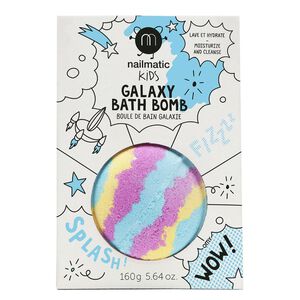 Nailmatic Galaxy Bath Bomb - GalaxyNailmaticGalaxy Bath Bomb - Galaxy